


Trying traditional Mexican food means stepping into a world of history, heritage and creativity. Every dish here has something to say. It brings generations together and celebrates the identity of an entire country. From traditional wood-fired stoves to the most contemporary menus, Mexico keeps reinventing its cooking without losing its essence.
Traditional Mexican food isn’t something you describe, it’s something you experience
Traditional Mexican food isn’t just tasted; it’s lived with passion and shared with the whole world. It was born where Indigenous peoples met knowledge brought from other lands, and it has evolved without losing its essence. From corn as the foundation of the diet to the endless combinations of colors, flavors and techniques, every dish is part of a living story.

Inseparable pairings of tomato, chiles, cilantro, onion and hundreds of other ingredients express local identity everywhere you look: street stalls, family kitchens, markets, fondas, social gatherings and fine-dining restaurants. Eating in Mexico is an everyday ritual where traditional doesn’t mean old-fashioned. It’s a way of reinventing itself day after day.
Traditional Mexican dishes
In Mexico, every region has its own way of telling stories. The country’s geographic, climatic and social diversity shows up in local cuisines that range from coastal hearths to the comal of the highlands, from the earth ovens of Maya villages to the grills of the north. Endemic ingredients, ancestral techniques and contemporary fusions build a food map where Mexicans everywhere leave their mark with authentic flavors. There’s a reason the country’s cuisine was recognized as Intangible Cultural Heritage of Humanity: eating here isn’t just tasting a dish, it’s understanding where it comes from and what makes it unique.

The flag bearer of Mexican food around the world


Few things represent Mexico better than a taco. It’s proof that complexity, tradition and flavor can fit inside a simple tortilla. With carne asada in the north, cochinita in the south, home-style guisados in the center or fish on the coast, every region makes tacos its own and every stand adds a twist. Still, they all speak the same language: the shared craving. At home, on the street or abroad, tacos are Mexican cooking’s calling card to the world.
Did you know…
- Did you know tacos al pastor have Lebanese roots?
This famous Mexican taco was born from Lebanese immigration to Mexico in the 20th century. The trompo, a spit of marinated meat cooked over charcoal, is a local take on shawarma. From the Middle East to the taquería, pineapple included! - Onions, salsa and… cochinada?
It’s not an insult, it’s a delicacy. At many taco stands you can ask for “cochinada”: a mix of drippings, bits of meat and browned onion that collects at the bottom of the griddle. A flavor bomb you won’t want to tell your doctor about!
Mole: a byword for complexity and celebration

Mole is one of the most popular dishes at special events. That’s not only because of its history or its dozens of ingredients, but because of the deep flavor it delivers: an intense blend of sweet, spicy and savory notes that wraps around the whole plate. There are many versions across the country, yet they all share a ceremonial character that makes mole a fixture at weddings, family gatherings and major holidays. It’s cooking that takes time, patience and purpose.
FUN FACT
Mole poblano has between 20 and 30 ingredients, chocolate included!
It’s the ultimate baroque dish. Chiles, spices, seeds and flavors you’d never imagine. A masterpiece in every spoonful!
Tamales: a morning classic with deep roots
Made from corn masa and filled with meats, salsas or even sweet ingredients, tamales are a regular part of everyday eating all over Mexico. Making them may look simple, but it follows a method handed down for generations, from grinding the corn to tying the final wrapper. You’ll find them at street-side breakfasts, family get-togethers and key dates like Día de la Candelaria (Candlemas), a living tradition that feeds people and brings them together.
From sea to table: seafood’s place in traditional Mexican food

In Ensenada, fish tacos with creamy sauces and crunchy cabbage. In Acapulco, a green ceviche that’s spicy and refreshing. In Cancun, the aroma of a fish fillet al mojo de ajo by the sea. Traditional Mexican seafood changes from coast to coast, but it always has something in common: freshness, good seasoning and a straightforward style that sticks with you.
Ceviches, aguachiles, seafood cocktails and more, all tasting of beach, sun and lime. It doesn’t matter if you like your heat mild or the kind that makes you sweat. There’s a salsa waiting to win you over!
Tex-Mex: is it traditional Mexican food?
Although it was born on the border, Tex-Mex food found its own path. Nachos with melted cheese, sizzling fajitas, chili con carne or overstuffed burritos: dishes that don’t follow traditional Mexican recipes but do speak to cultural blending. Today they’re on the everyday menu at plenty of street stands and restaurants, in Mexico and beyond. These are flavors that know how to steal any diner’s attention.

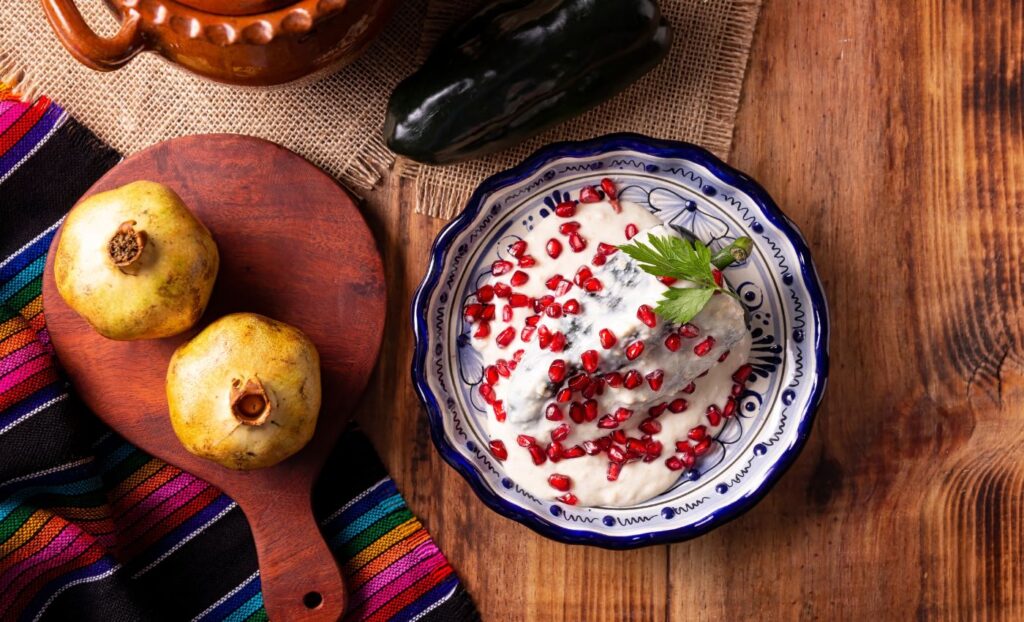
Chiles en nogada: a dish with the flag at its core
This classic from Puebla wins people over not only with its flavor but with what it represents. The green chile, the white nogada and the red pomegranate are no accident: together they make up the colors of the Mexican flag, and the dish is considered a flagship of traditional food. Legend has it that Augustinian nuns created it in honor of Agustín de Iturbide, and over time it became one of the country’s most emblematic dishes. It’s usually reserved for the national holidays, which gives it a special character. An experience that’s visual, intense and deeply symbolic.
Antojitos callejeros, the soul of everyday Mexican flavor
Elotes with mayo and chili, quesadillas off the comal, esquites in a cup, sopes fresh from the griddle and even steaming bowls of hen soup… Street food in Mexico isn’t just a quick bite, it’s part of everyday culture. Walk through any plaza or busy corner and you’ll run into a burst of aromas and textures that define informal, authentic flavor and carry the warmth of a joyful people.

Barbacoa cooked underground
Traditional Mexican barbacoa is made in earth ovens and cooked for hours with maguey leaves, which gives the meat an intense, smoky flavor. There are regional variations, but the best known comes from Hidalgo. It’s usually served on weekends with consomé, tortillas and salsa, and it turns into a shared ritual among family and friends.
Birria: spicy, juicy and perfect after a late night
From Jalisco to the whole world! Birria has become the classic that flies the Mexican flag in many countries. It can be served in tacos or in a deep bowl with a consomé loaded with intense flavor, and it stands out for its blend of spices, chile and slow-cooked meat. Its popularity has crossed borders, and today it’s also famous on the urban food scene in places like Tijuana and Los Angeles. It’s one of those dishes that calls for salsa, lime… and seconds.

Pozole: an ancient classic surrounded by myths about its origin

Born in pre-Hispanic ceremonies, this dish has made it through the centuries without losing its essence. Red, green or white, with pork or chicken, pozole is still a star at parties, family gatherings and everyday cravings. In every spoonful, tradition and flavor come together like in no other dish.
These days it isn’t only made on holidays. It also shows up on modern menus and in creative versions that respect its soul. From fondas to gourmet restaurants, you can enjoy a dish that surprises without forgetting its origins.
Myth or fact?
Fun fact: Did you know some historical accounts claim pozole was originally made with human flesh during pre-Hispanic rituals? Today, thankfully, the star ingredient is pork.
Traditional food in Mexico: could you pick just one salsa?
In Mexico, heat isn’t just a seasoning; it’s part of the personality of the country’s traditional food. Every chile has its own character and gives rise to a salsa that brings out its flavor. Intense flavors that go perfectly with your taco, burro, volcán, tlayuda and more.
Chiles at the heart of Mexican food culture.
- Jalapeño: Green, versatile and always ready for action. Great for beginners.
- Serrano: Unassuming to look at, explosive on the tongue.
- Habanero: Legendary heat, a staple of Yucatecan cooking.
- Ancho: Sweetish and deep, an essential base for moles.
- Guajillo: The go-to chile for adobos, with an earthy edge.
- Pasilla: Dark and elegant, with a smoky note that wins you over.
Salsas that never miss.
- Raw green salsa: Tomatillo, chile and freshness by the spoonful.
- Charred red salsa: Intense, flavorful and full of character.
- Salsa macha: Oily, crunchy and dangerous… because you can’t stop.
- Pico de gallo: Lighter, with tomato, onion and lime.
- Molcajete salsa: Age-old flavor in every pound of the volcanic stone.
Sweets are part of traditional Mexican food too
Forget what you know about sweets. In Mexico, cravings mix spicy, sour and salty without fear. Chili-coated tamarind, crunchy palanquetas, candied fruit and more. They’re not trying to be perfect, they want to surprise you. And they pull it off from the very first bite.

Tamarind with chili, a burst of contrast
Sour, salty, a little spicy and sweet, all in one bite, and sold in dozens of different forms. Tamarindo enchilado is addictive and a favorite on every street corner.

Alegrías: the sweet crunch of amaranth
Made with amaranth and honey, these traditional treats have centuries of history and still win people over with their simple texture and natural flavor.
Palanquetas and obleas
Somewhere between the crunch of peanuts and the delicate touch of an oblea with cajeta, these sweets are still around at fairs, corner shops and in childhood cravings.

Candied fruit
Pineapple, squash, papaya, sweet potato… simmered patiently with sugar until they turn into dense, colorful and thoroughly traditional sweets. Childhood flavors that are gentle on the palate.
Mazapanes that crumble before you unwrap them
Just touch it and the peanut mazapán threatens to crumble. Its fragility is part of its charm… and of its unforgettable flavor.
Mexican drinks that carry identity and custom in every sip
In Mexico, traditional drinks don’t just go with the food; they carry tradition too. Whether it’s a steaming cup of atole in the morning, a pitcher of agua fresca at lunch or a caballito of mezcal for a toast, each drink reflects local ingredients and ways of sharing that are still alive in markets, fondas and long after-meal conversations.
Atole and champurrado: warmth for the soul
Creamy, thick and comforting. Whether alongside a couple of tamales or as an on-the-go breakfast with fresh bread from a street cart, atole and champurrado are classics that warm body and soul, especially on cold days.

Agua de horchata and jamaica
Horchata, with its touch of cinnamon, and jamaica, with its deep red color and tart taste, are perfect partners for any Mexican meal. Besides cooling you down, they tell stories of Arab heritage and popular tradition that live on in every pitcher.
Beyond the toast: tequila and mezcal
They’re not just for parties; they’re treated with respect. Tequila stands for Jalisco’s pride, while mezcal embraces the diversity of regions like Oaxaca, Guerrero and Durango. Both are symbols of the Mexican countryside and of the way the country celebrates.

Café de olla: the smell of a Mexican home
This coffee isn’t made in modern machines but in a clay pot, with cinnamon, piloncillo and plenty of tradition. You’ll find it in markets, family kitchens and roadside stands. It’s the kind of drink that feels like a hug and, with one whiff, tells you you’ve arrived in Mexico.
Aguas frescas, the best match for traditional Mexican food

Tamarind, lime, cucumber, melon and many more: aguas frescas are on every corner and at every comida corrida. They’re part of the everyday food landscape: cheap, simple and always welcome.
Tepache and pulque: fermented drinks with loads of flavor
Tepache, made from fermented pineapple, is light and refreshing; pulque, thick and ancient, has been handed down since pre-Hispanic times. Two very different drinks with one thing in common: they’re still alive thanks to memory and popular tradition.

Ingredients that surprise you (in a good way)
Mexico has a list of ingredients that may seem unusual to some travelers but are a key part of its culinary identity. Chapulines (grasshoppers), for example, have been eaten since pre-Hispanic times, especially in Oaxaca, where they’re toasted with garlic, lime and salt.

Maguey worms, closely tied to mezcal production, are considered a delicacy and are usually served fried in tacos or as a snack. Then there are escamoles, ant larvae gathered mainly in the highlands and cooked with butter, epazote and chile. Huitlacoche, a corn fungus, goes into soups, tamales and quesadillas, while nopales, as common as they are versatile, are eaten grilled, in salads or stewed.
DID YOU KNOW?
Chapulines aren’t just crunchy and tasty. They also have more protein than beef. Eating insects in Mexico isn’t a novelty; it’s tradition (and nutrition).
More than traditional food: Day of the Dead and Mexican culture
On the Day of the Dead, Mexican food stops being just food and becomes a bridge between worlds and generations. Through flavors, aromas and recipes passed down, families remember and honor those who are gone. Cooking their favorite dishes, placing them on the ofrenda and sharing them at home isn’t a mere ritual. It’s a way of keeping their presence alive, celebrating memory and reaffirming a shared identity. On this date, cooking is company, an emotional language and a symbol of continuity. Eating, here, is also an expression of love, of not forgetting and, above all, of going beyond the idea of traditional Mexican food.

Frequently asked questions about traditional food in Mexico
If you’re planning a trip to Mexico, you’ll probably have a few questions about the country’s traditional food. Here we answer the most common ones to help you understand Mexico’s culinary richness and make the most of every bite during your visit.
Is all traditional Mexican food spicy?
Not necessarily. Although chile is a key ingredient, not every dish uses it, and many can be ordered without the heat. Keep in mind that even sweets and drinks can have a little kick, so it’s worth asking before you try something.
Where can you try truly authentic traditional food?
Markets, fondas and street stalls are the heart of local food. That’s where you’ll find everything from tacos and tamales to regional dishes made with traditional recipes. There are also restaurants that honor ancestral techniques with a more gourmet approach.
When is the best time to travel to Mexico for the food?
Mexican food can be enjoyed all year, but if you want to experience it at its fullest, the ideal time to travel is between September and November. That’s when key dates like Independence Day and the Day of the Dead are celebrated, along with seasonal traditional dishes such as chiles en nogada, pan de muerto, atoles and mole.
This is just a taste of the trip. If you’re still hungry for more, check out our other articles and keep exploring the flavors, colors and curiosities that make Mexico an endless feast and the world an infinite place full of stories.


